
Grondstof is een project dat wil aangeven hoe kostbaar onze Brugse grondstoffen zijn, en hoe we zoveel meer kunnen met wat er ons ‘rest’…
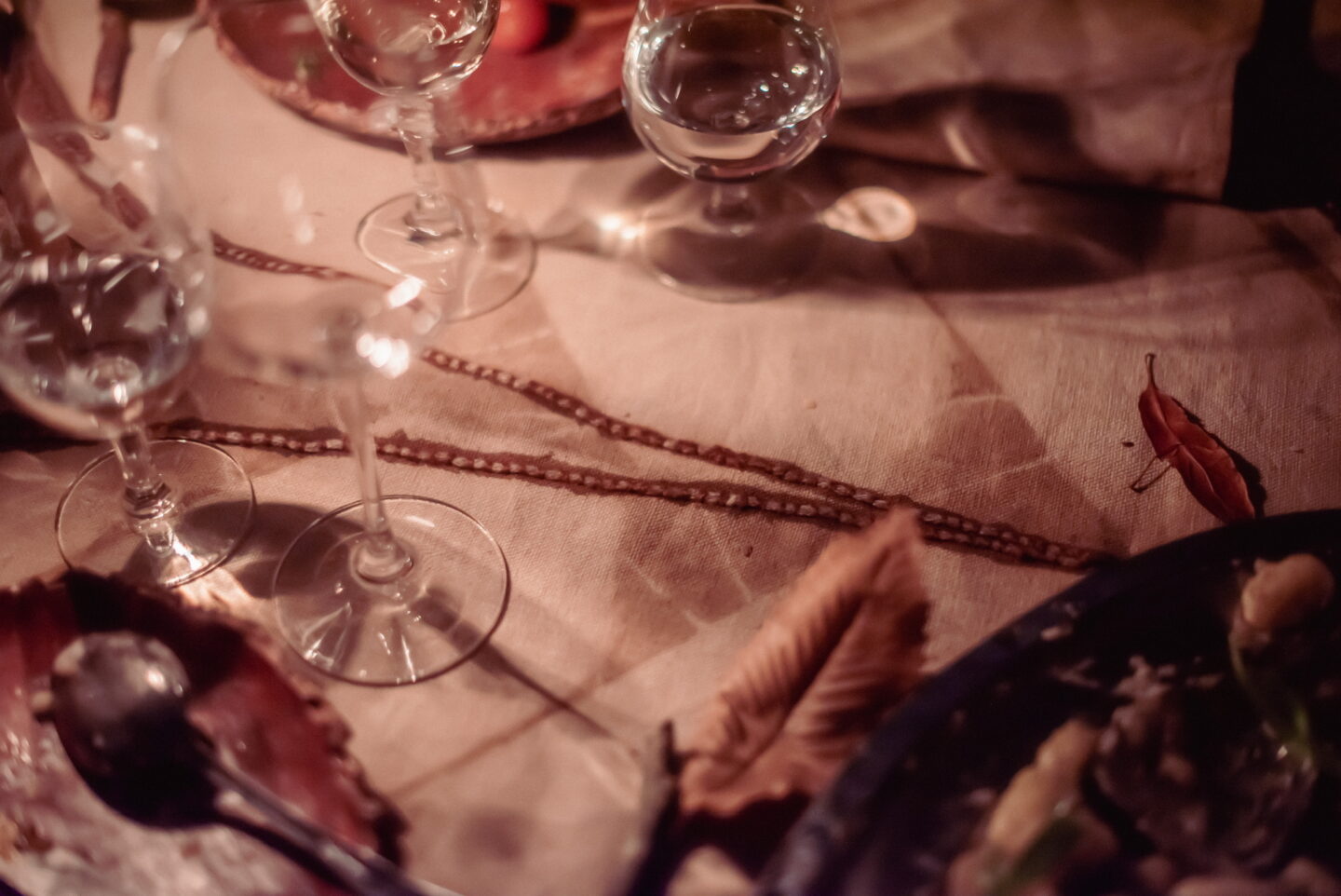
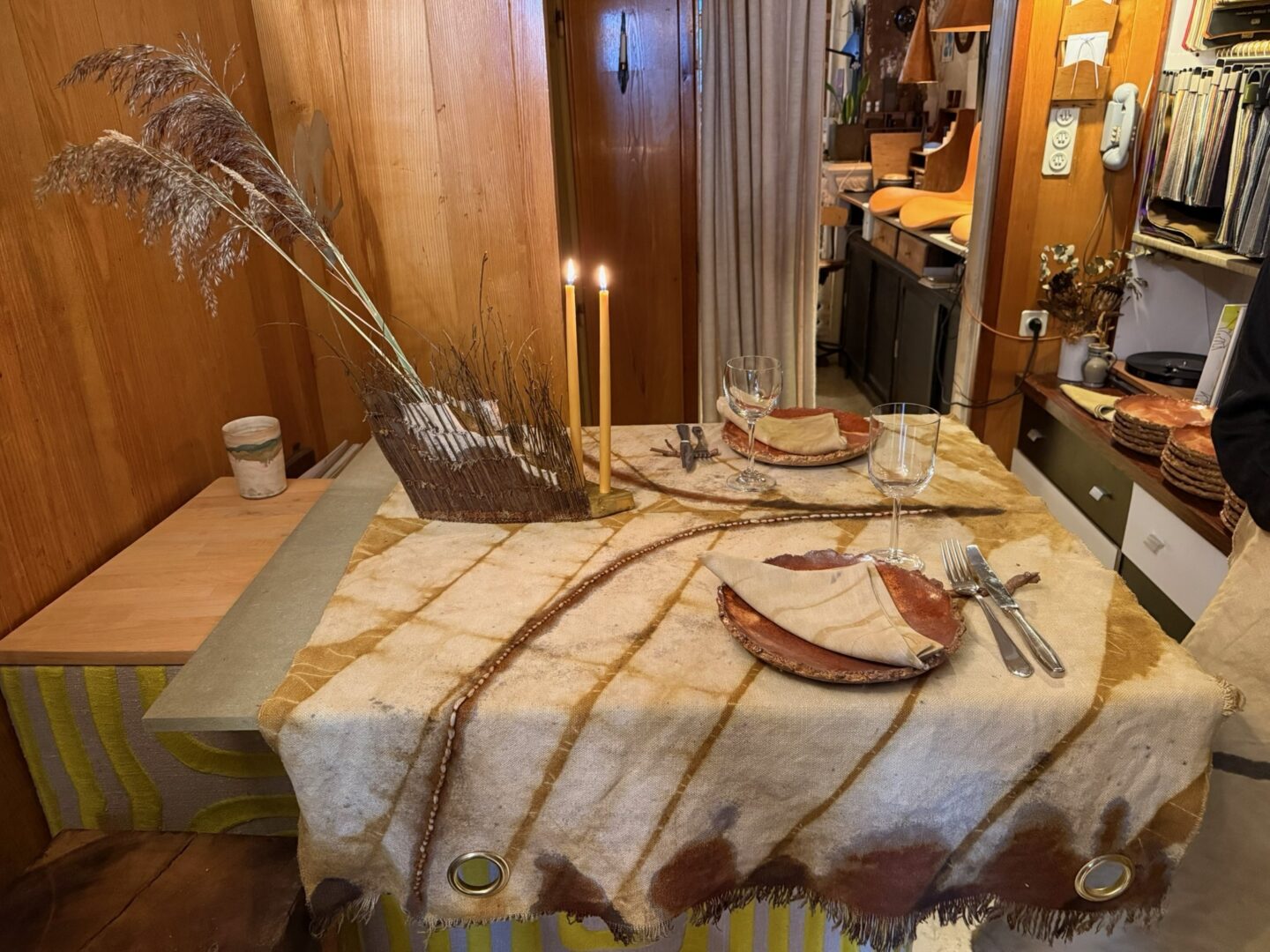
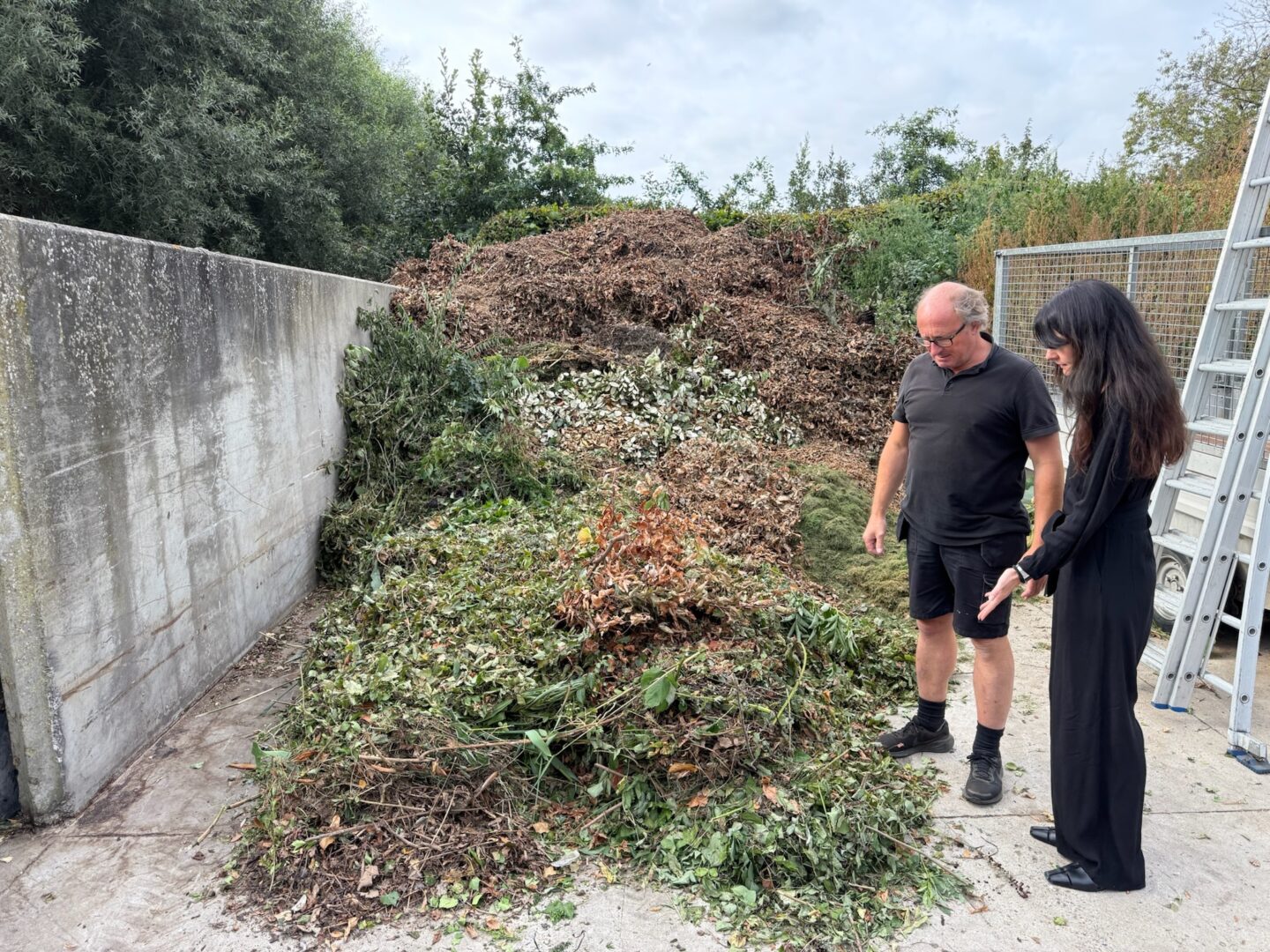
Voor GRONDSTOF.01 maakten wij samen met de Deense kunstenares Emilie Grubert een architecturaal doek. Een textiel op ambachtelijke wijze ontwikkeld vanuit een enorme berg Brugs snoeiafval, dat zich tegelijk als picknicklaken, tafelkleed, zonnetent en tuinkamer kan ontvouwen. In elk draadje schuilt de grondstof waar we ons als eerste, en mogelijks ook als laatste moeten aan vasthouden: hoop. Een tafel als gespreksstof, een doek als stad: Grondstof wil tonen dat schoonheid en toekomst vaak letterlijk onder onze voeten liggen.
GRONDSTOF.01 is vouwbare architectuur, een gesprekstafel, een toekomststof.
Een stof die Brugse grondstoffen koestert, gesprekken weeft en zo de toekomst verbeeldt…
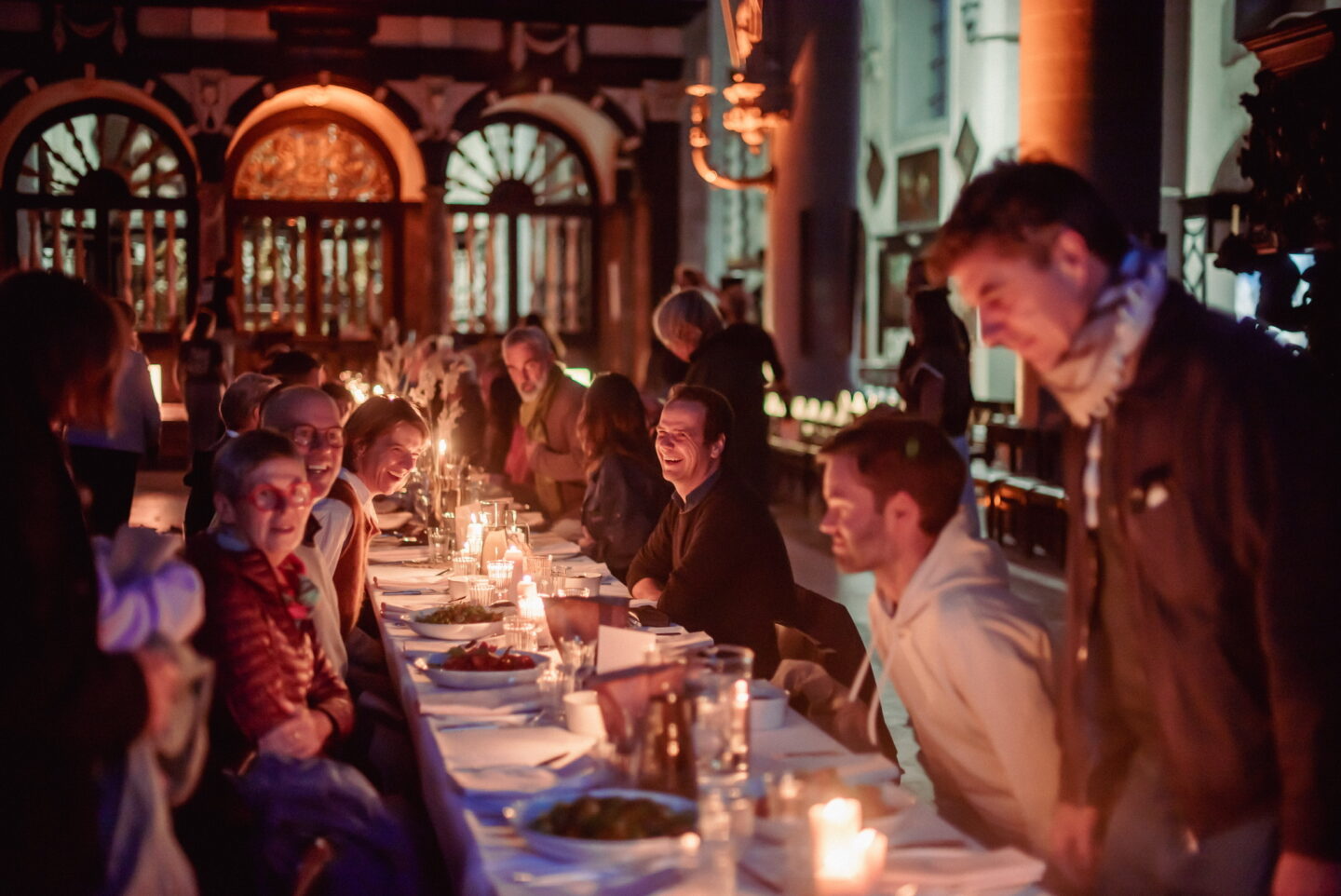
Afgelopen jaar organiseerden we in de Sint-Jakobskerk voor het eerst een social dining waar GRONDSTOF.01 dienst deed als tafellaken en conversation starter. De komende jaren zullen meerdere edities volgen, waarbij we nog meer Brugse grondstoffen koesteren, gesprekken weven en de toekomst verbeelden.
Kunstenaar
Emilie Grubert / Vanhille-Grubert
Titel werk
Grondstof
In opdracht van
Architectuuratelier Dertien12
GRONDSTOF.01/social dining
i.s.m. De Republiek
keramiek: Atelier Arena
bestek: Kringwinkel 't Rad
met grote dank aan: Peter Clyncke, Innengaard & Julie Hoste
Jaar
2025
Fotografie
event: Femke Den Hollander
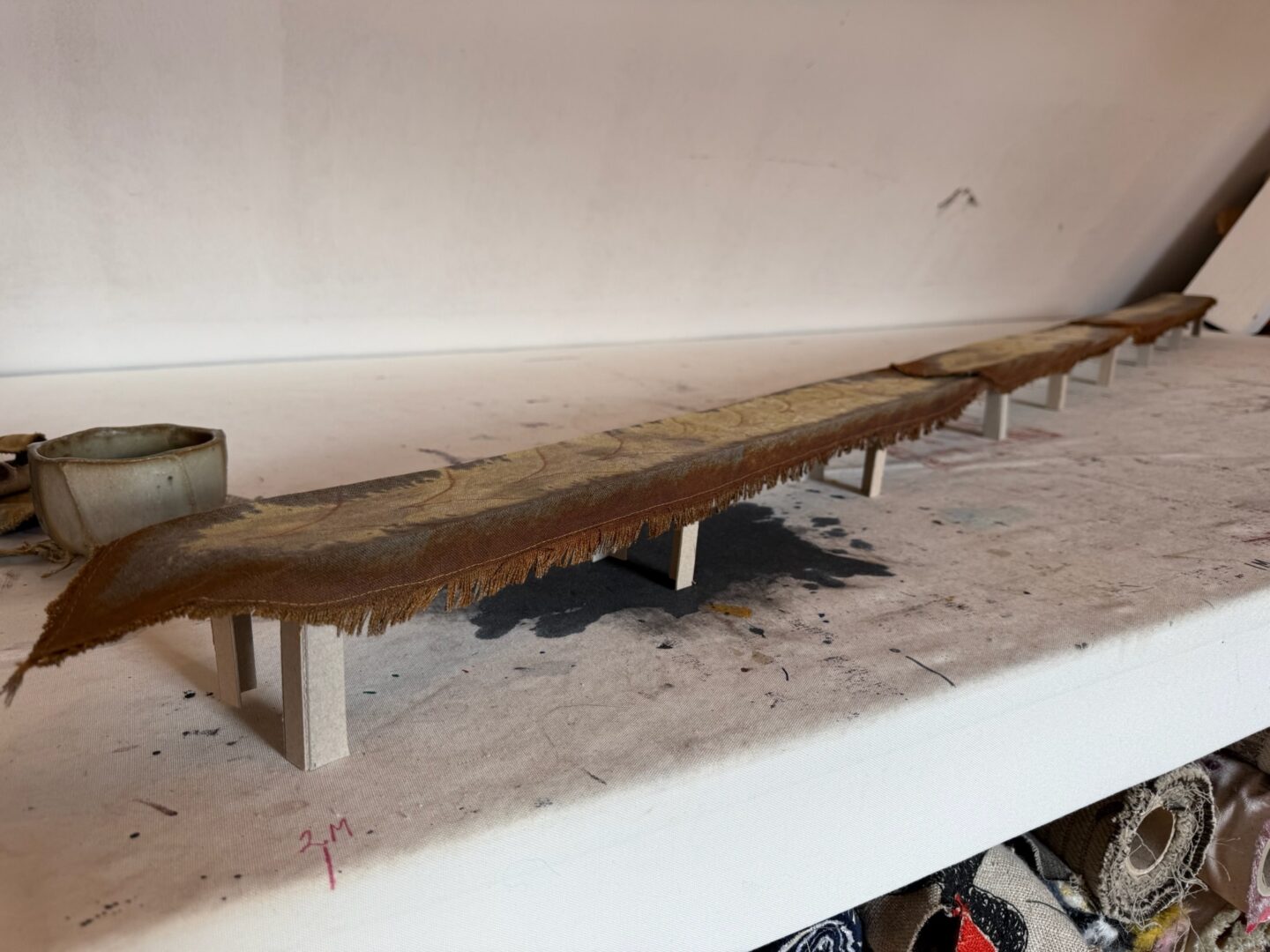
maquette: jAu fotografie
proces: Emilie Grubert


Good evening.
First of all I would like to thank Dertien12 and in particular Lennart, for this opportunity. It has been an absolute privilege to work with you.
What you see here is an experiment. An experiment in creating without destroying. An exercise in seeing possibilities in the discarded, and giving hope to what is considered hopeless, by focusing on what is right in front of us: the natural, instead of the synthetic.
This project begins where industrial logic ends, in the soil beneath our feet. It begins here, in this church that I can see from my atelier window, initiated by Dertien12 and Republiek, that I can reach in two minutes on foot. Local instead of global. The GRONDSTOF of our lives lived in this city.
Dertien12 designs buildings, the hard shell that protects us and improves our lives. My specialty is woven materials, the soft shell that first wraps us when we are born, and all the way till the end when we pass away. Foldable architecture, as Lennart calls it.
Textile is the only material that follows us throughout life, every day, all day, and yet most people know almost nothing about where it comes from, how it is made, what it’s made from, who made it, and what impact it has on the natural world. Today, we removed some of these barriers, the distance between maker and material and a transparency of the process.
“Hope” reoccurred throughout our discussions. The hope that emerges when one retrieve what has been abandoned. We began with cups, glasses, and cutlery from Kringloopwinkel’s stock, items destined for disposal.
The word afval, from afvallen to fall away, shares its root with the Danish word affald. Before the Industrial Revolution ‘affald’, described leaves that has fallen from trees. Post-industrialization changed our approach to production and raw materials, transforming the word's meaning in the dictionary from something that contributed to the fundamentals of the natural cycle of life, into something perceived as useless.
Words matter. The way we describe the world, shapes how we move and act in it.
The dictionary itself became an instrument of alienation, encoding a breech between human production and natural cycles.
We no longer participate in regeneration, we only consume.
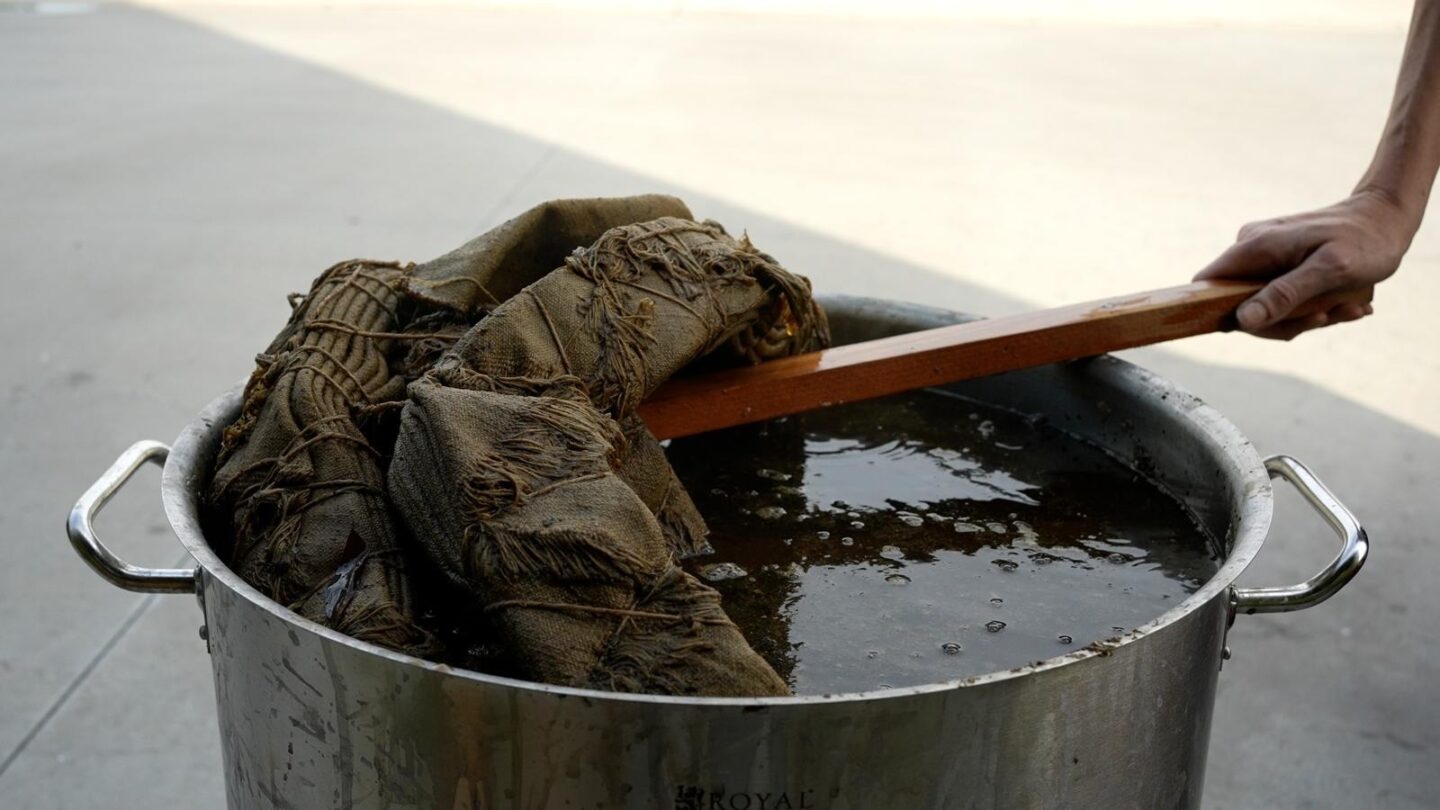
Given my excisting commitment to working mainly with natural materials, this understanding inspired the decision to use garden afval from Bruges to plant-dye Belgian linen.
Instead of coloring the fabric with synthetic chemicals made in some distant factory, I used the green matter of this place, this soil, this season. The plants that colored the cloth also determined its form and design: a leaf.
Belgian linen was the obvious choice, not only because we are in Belgium, but because it is among the most durable and sustainable fabrics. Flax cultivation requires less water than cotton, and linen has sustained European textile production for millennia. This is not nostalgia. This is recognition that durability is a moral category.
So the experiment began. And the result is what you see here, 9 meters of Belgian linen, dyed with 25 kg of plant material, and more than 300 hours of work.
Fabric napkins is a must. Single-use is so last season. Reuse is the future.
What began as a concept became a material investigation into creating quality purly from afval.
The shape of leaves are reused again for the shape of the table decorations and is made from twigs left over from the dyeing process, as well as the fabric that was cut away to shape the leaf tablecloth. Zero waste is a virtue.
The twenty-four ceramic plates were handmade just outside Bruges by Atelier Arena. If you don’t know them, you should check them out, they are incredibly talented.
I’d like you to think about what conversations become possible when we sit together at a table that confesses its origin. When we drink from glasses that have already lived other lives. When the cloth beneath our hands smells of the soil we daily live on.
Perhaps then we might remember that we too are made of borrowed GRONDSTOF. That we too one day will fall. That disposal is a fiction we tell ourselves to avoid confronting our inevitable participation in the vast cycle of life.
This is not recycling. This is resurrection, as the foundation.
This is where we begin again.
Emilie Grubert








Publicaties:
A Table That Confesses Its Origings - Garland Magazine: lees hier